Automation is not magic. It is plumbing.
Automation fails at the joints, never mysteriously. Where the hours actually go, and how to price the fix.
The pitch versus the pipes
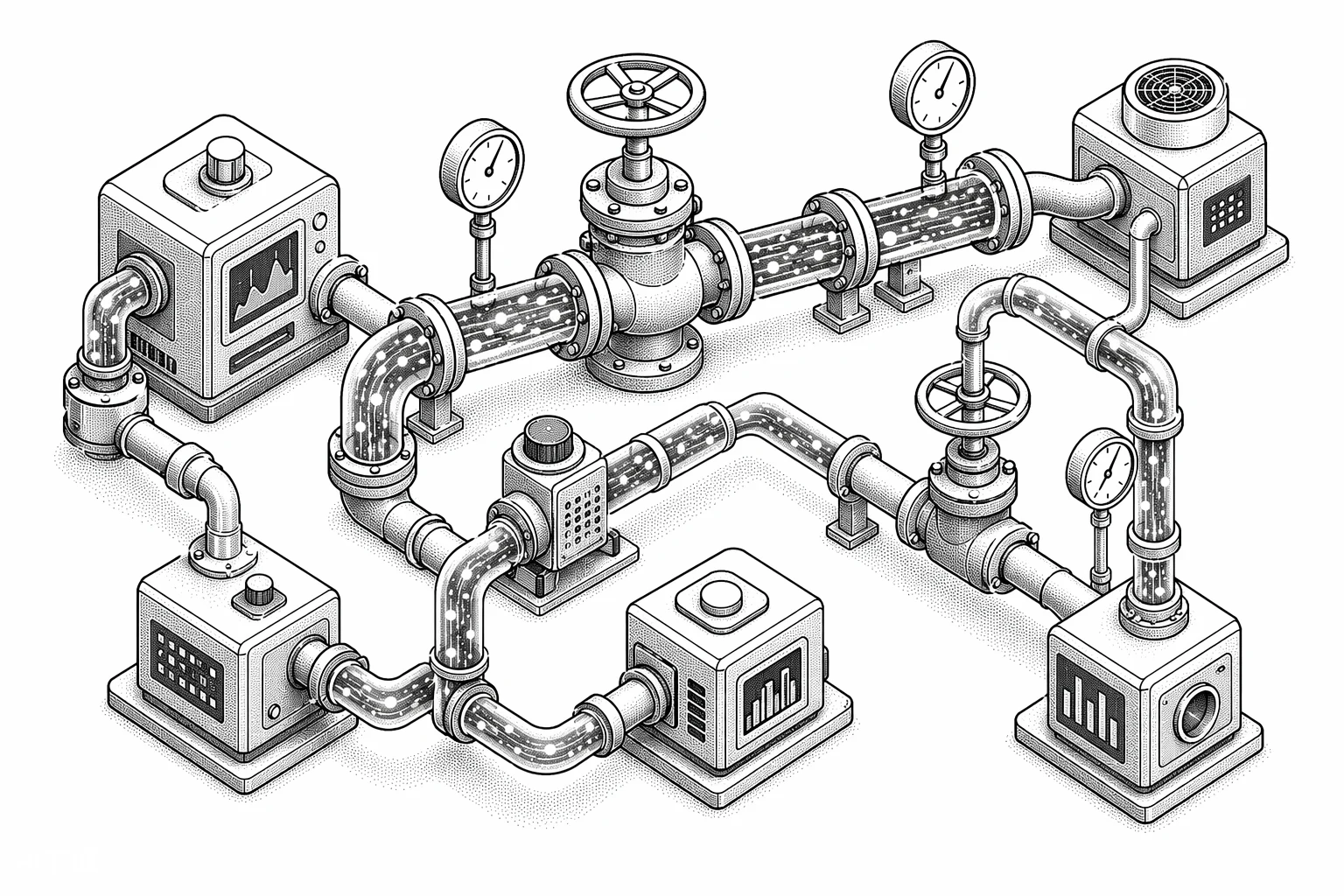
Automation gets sold as magic: connect a tool, press a button, watch the hours come back. Then it breaks on a Tuesday because someone renamed a column. The truth is duller and more useful. Automation is plumbing. It moves work from one place to another, and it is only as good as its joints.
What plumbing actually is
A pipe has three parts: a source, a route, and a destination. So does every automation. A form submission is a source. A spreadsheet row, a CRM entry, an email, a message in a chat tool — those are destinations. The route is the logic in between: format this, check that, branch here.
When an automation fails, it fails at a joint. The source changed shape. The destination rejected the input. A branch nobody documented made the wrong turn. It is never mysterious. It is always a specific, findable leak.
Where the hours actually go
Nobody loses an afternoon to one manual task. They lose it to the handoff: copying a lead from email into a sheet, re-typing an invoice total into the accounting tool, pasting the same status update into three places. Each handoff takes two minutes and happens forty times a week.
The fix is not a robot. The fix is a pipe from the first system to the second, with the middle step deleted. Deleting the middle step is most of the job.
The audit, briefly
Map the work before touching any tool. List every recurring task, what triggers it, and where its output goes. Mark every point where a human moves information from one system to another without changing it. Those marks are the automation candidates, ranked by frequency times minutes.
Then estimate honestly. An automation that saves four hours a week and costs two days to build pays back in a month. One that saves twenty minutes a month never pays back. Arithmetic makes these decisions; enthusiasm makes bad ones.
Why boring is the goal
Good plumbing is invisible. You notice it only when it leaks, so the measure of an automation is how rarely anyone thinks about it. That means error alerts that reach a human, logs that say what happened in plain language, and a document that explains the pipe to the next person.
The impressive demo automates twenty steps. The useful one automates the three that run every day, and it tells you when it cannot.
Where to start
Pick the handoff that annoys the team most often. Build that one pipe. Watch it for two weeks. The second pipe will be obvious by then, and it usually shares parts with the first.
Automation is not a transformation program. It is a wrench, applied to one joint at a time.